
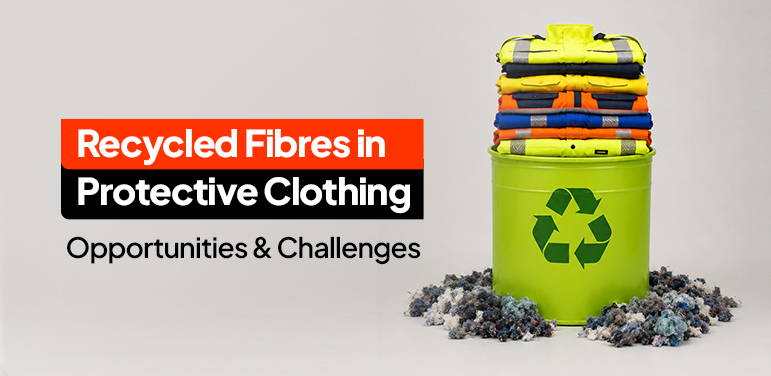
Sustainability is reshaping the protective textile industry, driving manufacturers to adopt circular solutions without compromising safety or regulatory compliance. As demand for environmentally responsible PPE grows, recycled fibres are emerging as a viable alternative to virgin raw materials, offering opportunities to reduce textile waste, lower carbon emissions, and improve resource efficiency. Protective clothing has traditionally …
Read More
Stoll Curve and its Significance in Heat and Flame Protection
The human skin is very sensitive to temperature. When the skin temperature reaches 45°C, the person will have a burning feeling. When the temperature reaches 72°C, it will cause second-degree burns to the skin. Alice Stoll and Maria Chianta in the latter half of 1960s, conducted a series of experiments on live, anesthetized test subjects. …
Read More
Do emblems and decorations on flame-resistant clothing need to be flame resistant?
Flame-resistant clothing (FRC) is crucial for protecting individuals working in high-risk environments involving fire and heat hazards. FRC is designed to resist ignition, self-extinguish, and minimize burn injuries. Specific emblems & decorations like embroidery, heat transfer etc. may be used on the FRC for representation of company logos, norms that the garments meet or any …
Read More