
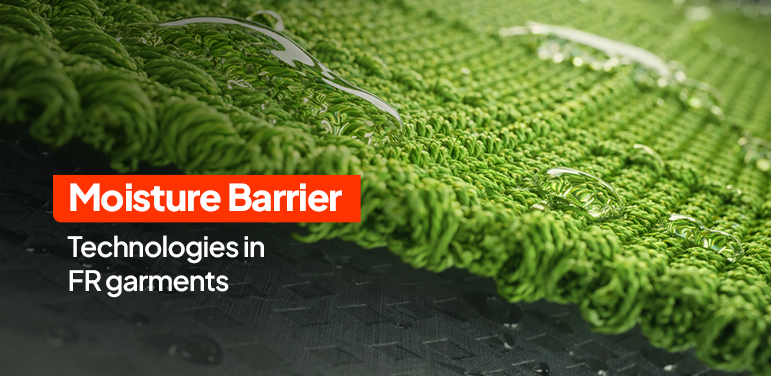
Firefighters and industrial personnel exposed to flash fire or steam hazards depend on multilayer protective systems that provide thermal insulation, liquid resistance, and breathability. Among these layers, the moisture barrier is crucial- it ensures protection against external liquids while maintaining internal comfort through controlled vapour permeability – Moisture Barrier Technologies. Functional Role of the Moisture …
Read More
Heat Transfer Performance (HTP) Explained
NFPA 2112, the Standard on Flame-Resistant Clothing for Protection of Industrial Personnel against Short-Duration Thermal Exposures from Fire, outlines minimum performance requirements for garments designed to protect workers from flash fire hazards. One of the critical parameters in this standard is Heat Transfer Performance (HTP). HTP measures the ability of flame-resistant fabrics to resist heat …
Read More
Stoll Curve and its Significance in Heat and Flame Protection
The human skin is very sensitive to temperature. When the skin temperature reaches 45°C, the person will have a burning feeling. When the temperature reaches 72°C, it will cause second-degree burns to the skin. Alice Stoll and Maria Chianta in the latter half of 1960s, conducted a series of experiments on live, anesthetized test subjects. …
Read More