
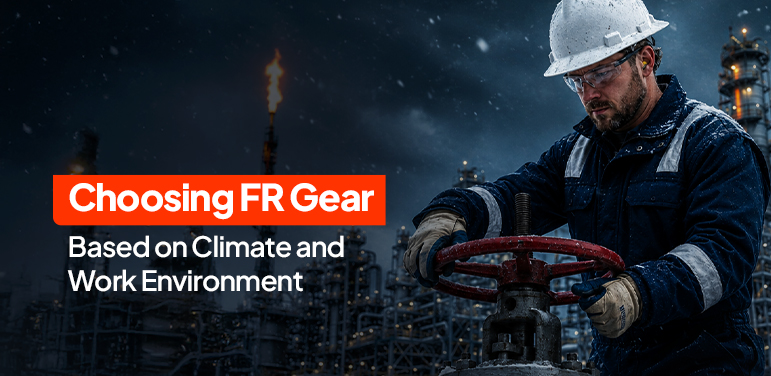
In high-risk industries such as oil & gas, utilities, construction, and manufacturing, flame-resistant (FR) clothing is more than just workwear—it’s a lifesaving barrier. Designed to protect against flash fires, arc flashes, and extreme heat, FR garments significantly reduce burn injuries and improve worker safety.
However, selecting the right FR clothing isn’t just about compliance. Climate conditions, job hazards, and wearer comfort all play a crucial role. Poorly chosen gear can lead to discomfort, improper usage, and increased risk on the job.
This guide explores how to select the right FR gear based on environment, climate, and workplace hazards, ensuring both safety and productivity.

Understanding Flame-Resistant Clothing
Flame-resistant fabrics are engineered to self-extinguish when exposed to flame, preventing ignition and limiting heat transfer to the skin. Unlike standard fabrics, they do not melt or continue burning.
To ensure performance, FR garments must comply with globally recognized standards such as:
- NFPA 70E – Arc flash protection
- NFPA 2112 – Flash fire protection
- EN ISO 11612 – Heat and flame protection
- IEC 61482 – Arc flash safety
- EN 1149-5 – Anti-static protection
Compliance guarantees that the garment performs reliably under defined hazardous conditions.

Climate-Based Selection of FR Clothing
Hot and Humid Conditions:
Workers in hot environments face heat stress, dehydration, and fatigue. FR clothing in such conditions should prioritize breathability and heat dissipation.

Key features to look for:
- Lightweight fabric construction
- High moisture-wicking capability
- Ventilated designs for airflow
- High Total Heat Loss (THL) rating
Cold and Harsh Climates:
Cold environments introduce risks like frostbite, reduced dexterity, and cold stress. The solution lies in a layered FR system:
- Base Layer: Moisture-wicking FR fabric to keep skin dry
- Mid Layer: Insulating materials like FR fleece or quilted fabric
- Outer Layer: Weather-resistant, flame-resistant protection against wind and snow

Rainy and Wet Conditions:
Wet conditions demand FR clothing that combines waterproofing with flame resistance.
Important considerations:
- Certified FR/arc-rated rainwear
- Durable, waterproof materials
- High-visibility colors and reflective strips
- Comfortable fit for mobility

Selecting FR Gear Based on Work Environment
In addition to climate considerations, FR clothing must match the specific hazards present in the workplace. A comprehensive hazard assessment helps determine the appropriate level of protection.
Flame resistance is a Tarasafe’s Speciality. Backed by deep-rooted experience, our comprehensive range of best-in-class, certified FR fabrics ensures reliable protection across diverse working conditions. Tarasafe provides a variety of protective garments according to work environment and conditions.
Electrical Utility Operations
Electrical workers face the risk of arc flash incidents, which generate extremely high temperatures and intense radiant energy. Appropriate protective clothing should include arc-rated garments designed to withstand these energy exposures.
Oil and Gas Operations
Workers in oil and gas facilities are primarily exposed to flash fire hazards caused by flammable gases and hydrocarbons. FR coveralls or two-piece garments with durable flame-resistant properties are commonly used in these environments.
Welding and Fabrication
Welding and fabrication operations expose workers to sparks, molten metal splashes, and radiant heat. Protective garments for these environments typically use heavier fabrics and reinforced construction to resist metal splatter and abrasion.
Roadside and Utility Maintenance
Workers operating near traffic or in low-visibility conditions require garments that combine flame resistance with high visibility. Reflective tapes and bright colours improve worker safety during night operations or adverse weather conditions.
Key Considerations When Purchasing FR Clothing
Before selecting FR gear, safety managers should evaluate:
- Certification Labels: Ensure compliance with safety standards
- Non-Melting Components: Buttons, zippers, and closures must resist heat
- Undergarments: Avoid synthetic fabrics; opt for FR or natural fibers
- Fit & Mobility: Proper fit ensures both safety and comfort
Why the Right Selection Matters
Choosing the correct FR clothing is about balancing three critical factors:
- Hazard Protection
- Climate Suitability
- Worker Comfort
When workers are comfortable, they are more likely to wear PPE correctly—reducing risks and improving compliance.
Leave a Reply